Author: Boat Accessories Australia Date Posted: 16 June 2026
You’ve seen that boat at the ramp - the one with the deep, mirror-like shine that looks brand new despite being ten years old. Then you look at your own vessel and notice the finish is starting to look a bit dull, chalky, or maybe has a few nasty scratches from a rough docking.
This outer layer is your gel coat, and it is the single most important factor in how your boat looks and how well it survives the elements. Over time, general use, accidents, or improper cleaning can damage this protective skin. Before you start reaching for the sandpaper, you need to understand exactly what this material is and the proper steps to take to get that factory shine back.
You wouldn’t be the first boaties asking, "What is gel coat, exactly?" Put simply, it is a high-quality, specially formulated resin that goes over the fibreglass of your boat. It is manufactured using a blend of epoxy or polyester resins, chemical catalysts, and pigments.
While it doesn't provide much in the way of structural strength on its own, when it is bonded to the fibreglass, it creates a smooth, incredibly durable surface. This layer acts as the primary barrier for your hull.
It blocks water intrusion that could weaken the fibreglass underneath and provides a shield against ultraviolet (UV) light. During the manufacturing process, the boat's gel coat is actually the first thing sprayed into the mould. This is why, once the boat is popped out, the gel coat is on the very outside, providing that glossy, coloured finish we all recognise.
Not all coatings are the same. You will generally encounter two different types of gel coat depending on where it is used on the vessel:
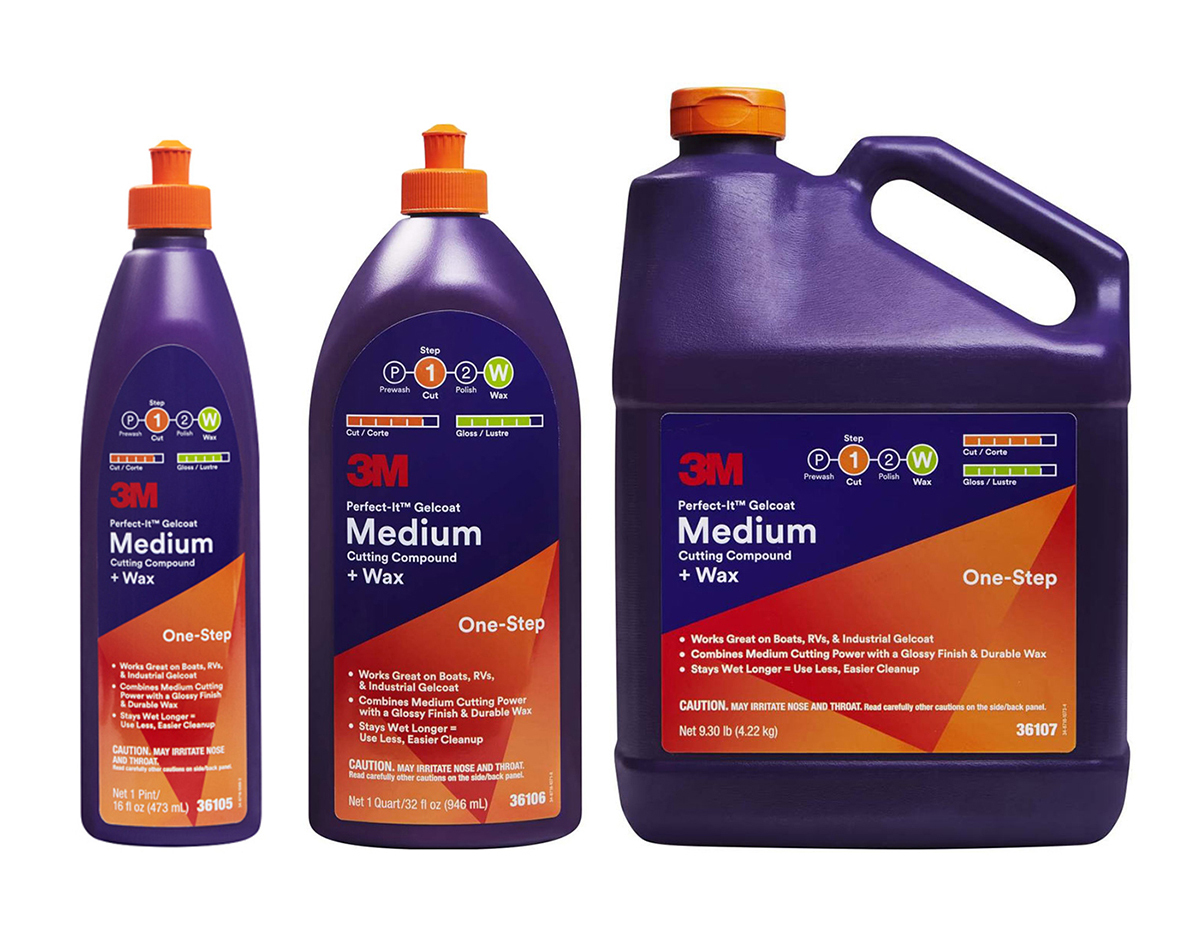
You can prevent your boat from looking old before its time by watching what you use to clean it. Caustic cleaners or products containing bleach are incredibly aggressive and will age your boat's gel coat rapidly. If you must use a strong cleaner for a specific stain, make sure you rinse the area thoroughly with fresh water immediately afterwards.
Abrasions are another silent killer of gloss. Using a stiff-bristle brush might seem like a good idea for removing dried salt, but on a shiny gel coat, it will eventually scrub the gloss away, leaving microscopic scratches that trap dirt.
Always use a soft-bristled brush, a sponge, or a dedicated microfibre rag. UV damage is the final boss; it creates peaks and valleys on an unmaintained surface, exposing more area to the sun and leading to that dreaded chalky oxidation.
Keeping your boat coated with a high-quality wax is the most effective way to prolong its life. A boat that is waxed twice a year can retain its factory gloss for 15 years or more. The wax acts as a sacrificial barrier, taking the hit from the sun and salt so your gel coat doesn't have to.
If your finish is already looking a bit dingy, a restorer formulation can help. These are designed to renew the gloss without the heavy buffing required for a traditional wax. Many boaties find that a three-step system - involving a prep wash, a polish, and then a final protective sealer - is the best way to bring a neglected hull back to life.
If you’ve discovered a nick or a gouge, a DIY gelcoat repair is often quite manageable. For shallow scratches, you can often buff them out using a cutting compound. This removes a tiny layer of the surface to smooth out the mark. If the scratch is deep enough to feel with your fingernail, you will need to use a filler.
Start by cleaning the area with a wax-free solvent to get rid of any old polish. For deep gouges, use a high-quality polyester-based filler. You want to overfill the hole slightly because the material can shrink as it cures.
Once it has hardened, you can sand it back, starting with a 600-grit wet sandpaper and moving up to 1200 or 1500-grit for a smooth finish. After sanding, a quick buff with a polishing compound will bring back the shine.
When performing a gelcoat repair, the environment is just as important as the technique. If you are working in a warm Australian summer, your resin will "gel" much faster than in winter. A helpful rule of thumb for mixing is the "drops per 50ml" method.
In warm conditions, about 20 drops of catalyst per 50ml of resin is usually enough. In cooler weather, you might need up to 40 drops to get the same result. Always mix the catalyst in thoroughly for at least a minute to avoid hot spots in the resin.
If you are applying a new layer over an old one, make sure the surface is sanded and completely free of dust. If you are working on a vertical surface, look for a "no-sag" filler to prevent the repair from running down the side of your hull while it cures.
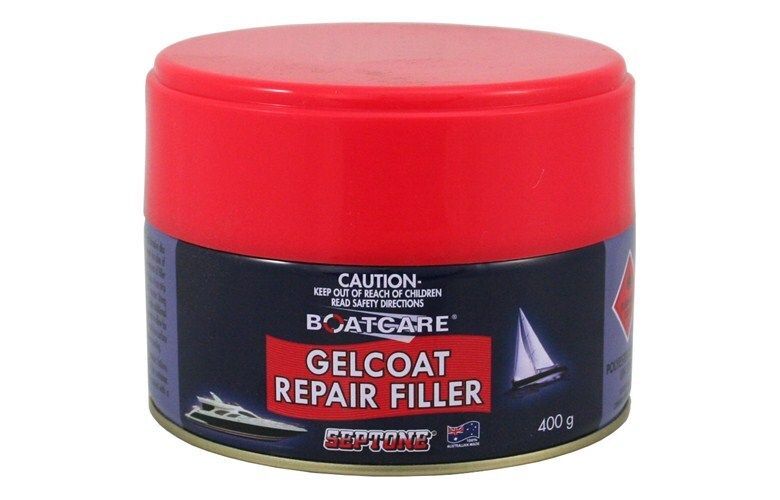
To get the best results, you need the right chemistry. For structural repairs where you need to bridge a hole or a crack up to 50mm, we recommend the Septone FibreTough Glass Fibre Filler. This is a reinforced polyester putty that is waterproof once cured and exhibits fantastic adhesion.
For cosmetic chips and scratches above the waterline, the Septone Gelcoat Repair Filler is a brilliant choice. It has a buttery texture that is easy to apply and cures to a clean white finish. If you are starting from scratch or need to bind a split area, the Septone Fibreglass Repair Kit is an all-in-one solution. It includes the resin, the catalyst, fibreglass matting, and even the measuring cups and gloves you need to get the job done safely.
Maintaining your fibreglass gel coat is about more than just vanity - it is about protecting the structural integrity of your vessel! Whether you are dealing with minor oxidation or a deep gouge, taking the time to do the repair correctly will save you thousands of dollars in the long run.
Browse our full range in the fibreglass repair category to find the fillers, resins, and catalysts mentioned in this guide. If you are unsure about a colour match or which filler is best for your specific repair, get in touch with our team. We have everything you need to get your boat back in the water and looking as good as the day it was launched.
Gel coat for boat
By: Krishna on 15 February 2023Useful and informative article. The gel coat repair, filler and hardener are well researched and helps in prolonging the life of the boats.

 FREE SHIPPING