Author: Boat Accessories Australia Date Posted: 27 September 2026
Getting your boat to the ramp in one piece comes down to one skill every boatie has to nail: how to tie a boat down to its trailer properly. Get it wrong, and you can wreck your own boat, damage other cars, or worse — a boat that comes off the trailer at highway speed can seriously hurt someone or cause a fatality.
The good news is that a solid tie-down boat trailer setup is simple once you know the three contact points, the right boat trailer straps for your rig, and how to use them. This guide covers all of it, plus the towing habits that keep the whole lot stable from the driveway to the water.
Australian roads see accidents every year from poor trailer maintenance, a boat that was not secured to the trailer, or a trailer that was not hitched to the car properly. Inattention and complacency cause most of them.
Both novices and seasoned owners are at risk — the new boatie misses a step they have never been shown, while the old hand gets complacent and skips something in a rush at the boat ramp. A few of those slip-ups turn up in our rundown of common beginner boating mistakes, and securing the boat sits near the top of the list.
.jpg)
Some boaties crisscross ropes over the boat to hold it on the trailer and stuff their camping gear inside the hull. That is the wrong way to secure a boat to a trailer, and it can damage the hull over a long trip. There are three points to tie down instead — the stern on both sides, and the bow.
The stern works best because it carries heavy-duty reinforcement and, tied down, it presses the hull firmly onto the trailer's rollers. The trailer forward of the stern is built to flex, so strapping the boat down there lets the boat and trailer pull in different directions, and that is what cracks hulls.
Alloy boats and dinghies can have the hull pull away from the seats, which compromises the boat's strength, while fibreglass boats pick up small cracks in the hull sides and bulkhead. Tie the bow down as the third point, and the boat and trailer can flex independently of each other. The bow strap usually runs to the trailer winch post, so check that the hook and webbing are in good order before every trip.
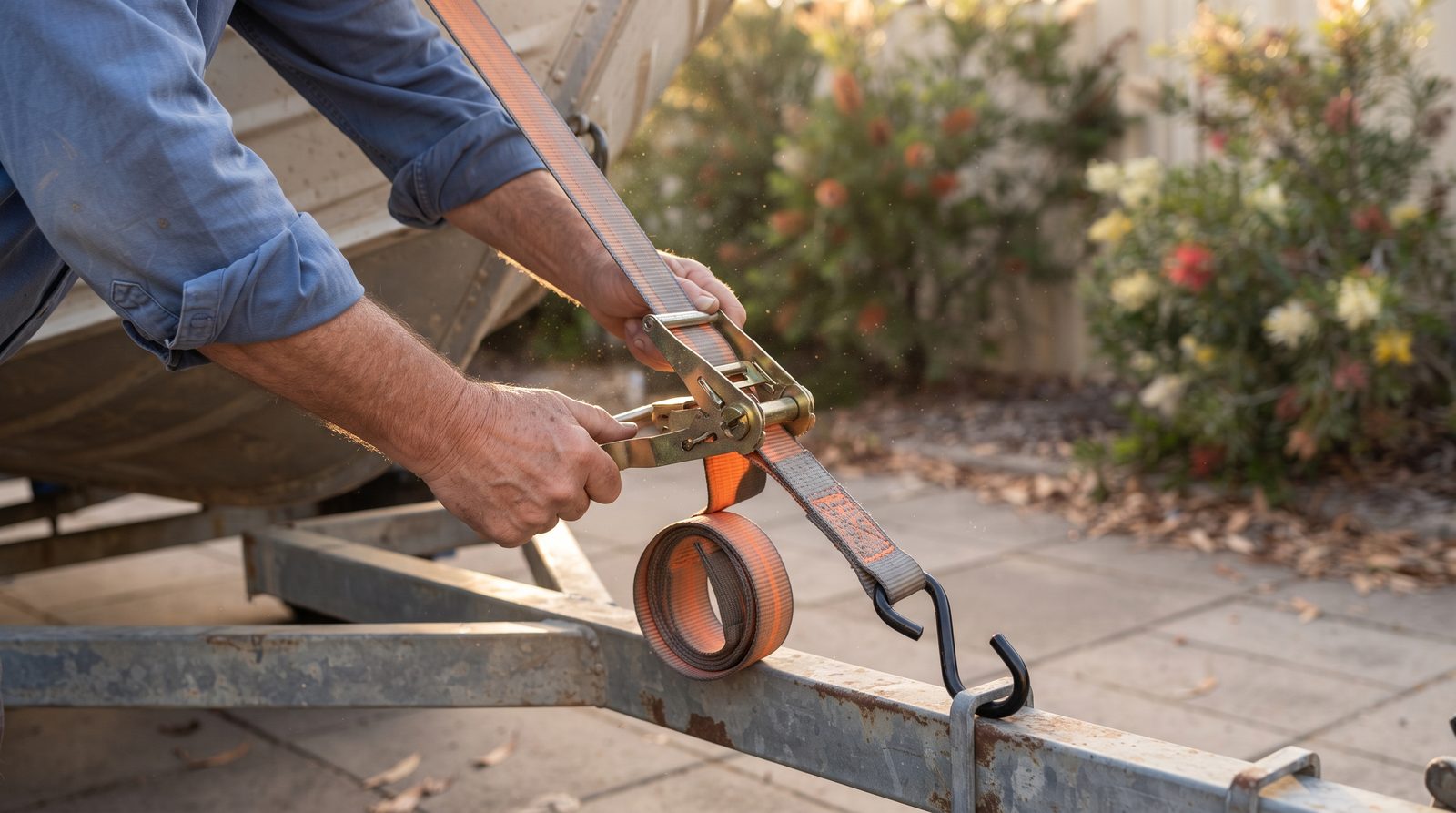
The best way to tie a boat down is with ratchet straps. Rope lying around the shed looks like a cheap option, but not when it chafes the boat or works loose at 100km/h. Nylon boat trailer straps will not mark the finish the way rope can, though it still pays to pad between the strap and the hull with offcuts of old foam or rubber matting.
Tinnies do not weigh much, so there is no need to go heavy. A 25mm light-duty webbing strap with plastic-coated S hooks is plenty to hold a small boat steady. For the back of the boat, stainless steel hook transom tie downs are the pick — they shrug off the salt and come in 1.5m and 4.5m lengths.
Step up to a larger boat and you need more straps. Swap the 25mm for a 50mm medium-duty ratchet strap with large coated S hooks to keep the hull planted. This over-boat strap runs 5.5m, with an S hook on one end and a handy swivel J hook on the other to clip onto the trailer in seconds.
Knowing how to thread and release your straps is half the battle, so learn it at home before it counts. Fumbling a tie-down boat trailer setup for the first time at a busy ramp is how disasters start — an hour in the driveway getting the straps dialled in for your boat and trailer is time well spent. The same goes for getting the boat on and off the trailer; practise the whole routine where there is no queue behind you.
This video is a good reference:
A heavy load behind you cuts your acceleration, braking and manoeuvring, so read the road earlier than you would without it. Leave extra stopping distance and brake smoothly, because jerky movements can shift a trailered boat or even destabilise it and tip the lot.
Every state and territory sets its own towing regulations, so a boat or trailer bought in one state is not automatically legal in another. Check the rules where you tow, and give the boat and trailer a regular visual once-over.
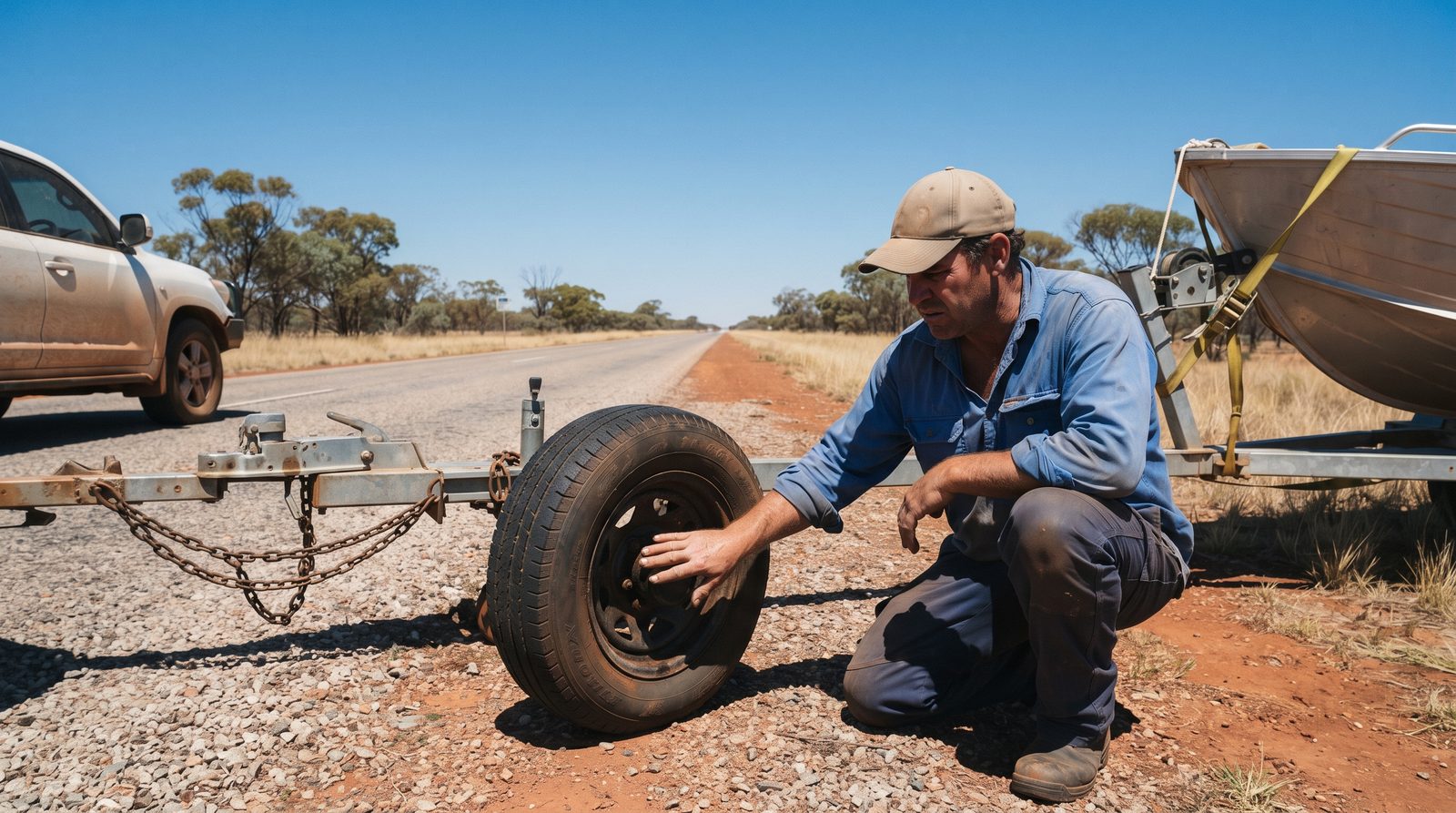
On long runs, stop regularly to check the boat has not moved and the straps are still tight. Pull well off the road and check the coupling, the safety chains, the electrical connections and the tyres. Last, feel the hubs for excessive heat — it is an early warning of wheel bearing failure.
How you load the boat matters just as much as the straps. A rod and a bucket are nothing to worry about, but air tanks, eskies and full fuel tanks need thought. Plenty of skippers throw all the gear at the back to keep the cockpit clear, when ideally about 60% of the weight should sit forward and 40% at the rear. A boat loaded too heavily at the back can sway in crosswinds or at speed, so spread the load evenly side to side as well.
A safe tow starts with the right straps, not whatever is rattling around the shed. Match your rig with proper marine-grade tie-down straps and ratchet straps built to hold a boat at highway speed, and look over the rest of your setup in the full trailer parts range while you are at it.

 FREE SHIPPING