 FREE SHIPPING

Sun, salt and a long blue-water run take their toll on every boat, and the gear that makes your day on the water cops the grime right alongside you. Boat cleaning is the chore most boaties put off, but a tidy hull and a fresh cockpit protect the money you have sunk into your pride and joy. The good news is you do not need a professional detailer.
With the right marine cleaning products and a bit of know-how, you can handle boat cleaning and detailing yourself and keep her looking sharp season after season. This guide walks through how to clean a boat by hull type, how to detail it, and how often to do each job. Treat it as part of your wider boat maintenance routine, and the work stays small instead of turning into a weekend rescue mission.
How to Clean a Boat
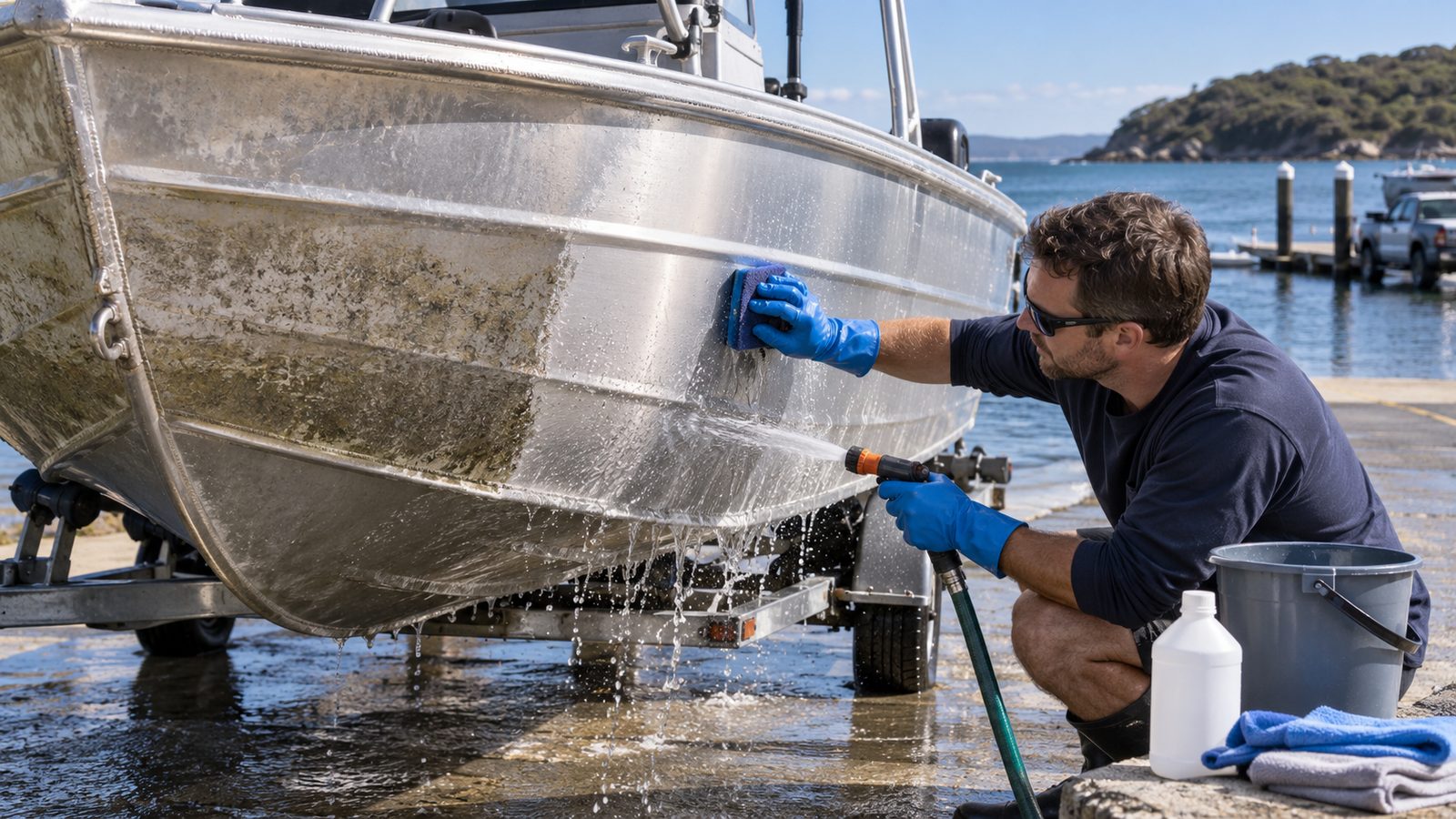
The best way to clean a boat starts with the hull material, because fibreglass and aluminium each react differently to chemicals. Reach for specialised marine products and the correct technique, not whatever is under the kitchen sink.
Household cleaners are highly alkaline, so they can etch the surface and strip the protective wax. Proper marine cleaning products sit at a neutral pH of 7, so they lift dirt and salt without damaging the finish. Get that one decision right and the rest of your boat cleaning falls into place.
How to Clean an Aluminium Boat
Aluminium boat cleaning starts at the water line, where hulls show their age as staining and a dull, oxidised film. A dedicated marine aluminium cleaner cuts through both without scouring the metal. Go too strong, though, and you will chemically scour the hull, which shows up as ugly blotching, so match the strength to the job.
Work a scrubbing pad over the stains with even pressure. Most aluminium cleaners contain acid to strip oxidation, so wear chemical-resistant gloves and eye protection before you start. To avoid permanent drip marks, begin at the bottom of each section and work upward in small patches, and never let the cleaner dry on the surface - keep rinsing with fresh water as you go.
A thorough fresh-water rinse every few weeks also clears the salt and contaminants that feed oxidation in the first place, and a marine salt remover makes that rinse more effective if your boat lives near the coast.
How to Detail an Aluminium Boat
Cleaning lifts the grime; boat detailing brings back the finish. Once the hull is dry, work an aluminium polish over the bare metal to restore the unpainted look and neutralise any acid wash you did not fully rinse away. Apply it with a clean cloth and swap the cloth out as it loads up with oxidation. The polymers in a good polish add a layer of UV protection and bring tired, older hulls back to life.
How to Clean a Fibreglass Boat
Fibreglass boat cleaning lives or dies by the gelcoat, the outer layer that shields the fibreglass underneath, so regular hull cleaning keeps it intact. If your boat sits out in the weather, a quick hose every week or so clears built-up dirt and grime and holds that just-launched look for longer.
After any run in salt water, hose the whole boat down with fresh water. Skip the metal hose nozzle - drop it once, and you can crack the gelcoat. When she is genuinely dirty, wash with a marine boat soap rather than reaching for household detergent.
Do not soap her every week, though, or the wax will not last - save it for when the boat is actually grubby, every few weeks. As you wash, rinse your cloth in a second bucket or swap cloths often so trapped grit does not scratch the surface. Once the soap is off, dry the gelcoat with a chamois or squeegee and finish with a soft-cloth buff.
How to Detail a Fibreglass Boat
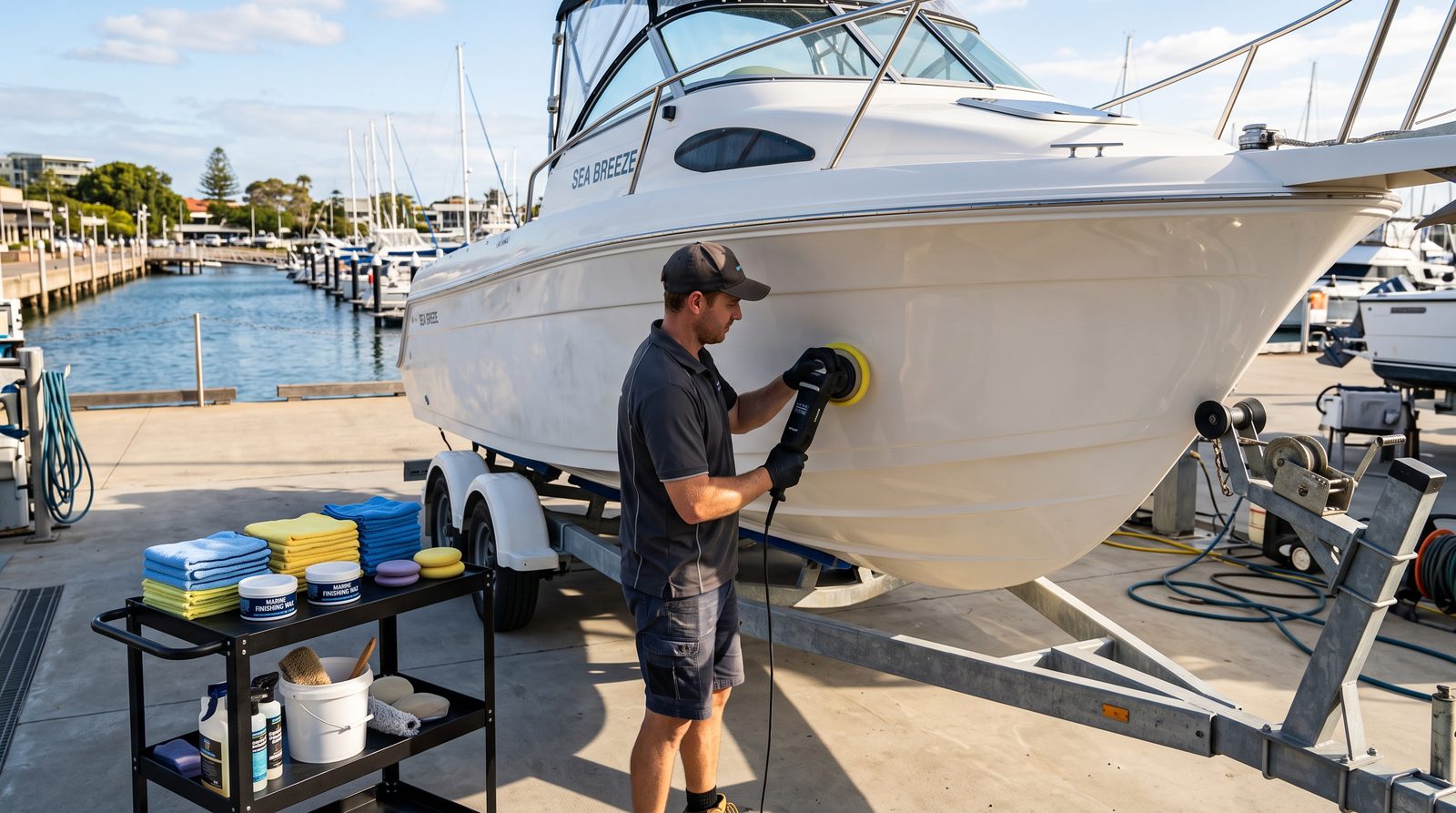
With the hull clean, boat detailing is about protecting and bringing up that gelcoat. Australian sun and salt are brutal on it, and a dull, chalky surface is the first sign it is losing the fight.
Detailing the Hull
Detailing the gelcoat protects it from oxidation, the process that leaves that chalky finish and lets water creep into the fibreglass. Every four to six months, after a thorough hull cleaning, apply a boat wax - think of it as sunscreen for the gelcoat.
It lifts minor oxidation and fallout and leaves a deep, glossy finish. If the hull has already gone chalky, knock the oxidation back before you wax. A buffing compound with a fine abrasive is ideal here, clearing surface imperfections and swirl marks up to a high gloss.
Detailing the Boat's Interior
With the hull sorted, move inside. Pump out the bilge and clear any oil or contaminated water with a bilge cleaner, then check the fuel lines and tanks for damage while you are down there. It is also the right moment to confirm the bilge pump itself is doing its job - our guide on troubleshooting bilge pump issues covers the common faults if it is not.
How to Protect Wood and Metal Surfaces on a Boat
Timber and metal need their own attention once the big surfaces are done. For a timber deck, lift staining and weathering with a teak cleaner, then seal it with teak oil to guard against the sun, salt and acid that age the wood before its time.
Metal fittings deserve a regular polish too. Run over the boat for any aluminium, stainless steel, nickel, or brass and copper parts, and work polish in with a soft, clean cloth in a circular motion to clean and shield them from rust, oxidation and staining. Match the product to the metal - the wrong one can do more harm than good.
How to Clean Boat Seats
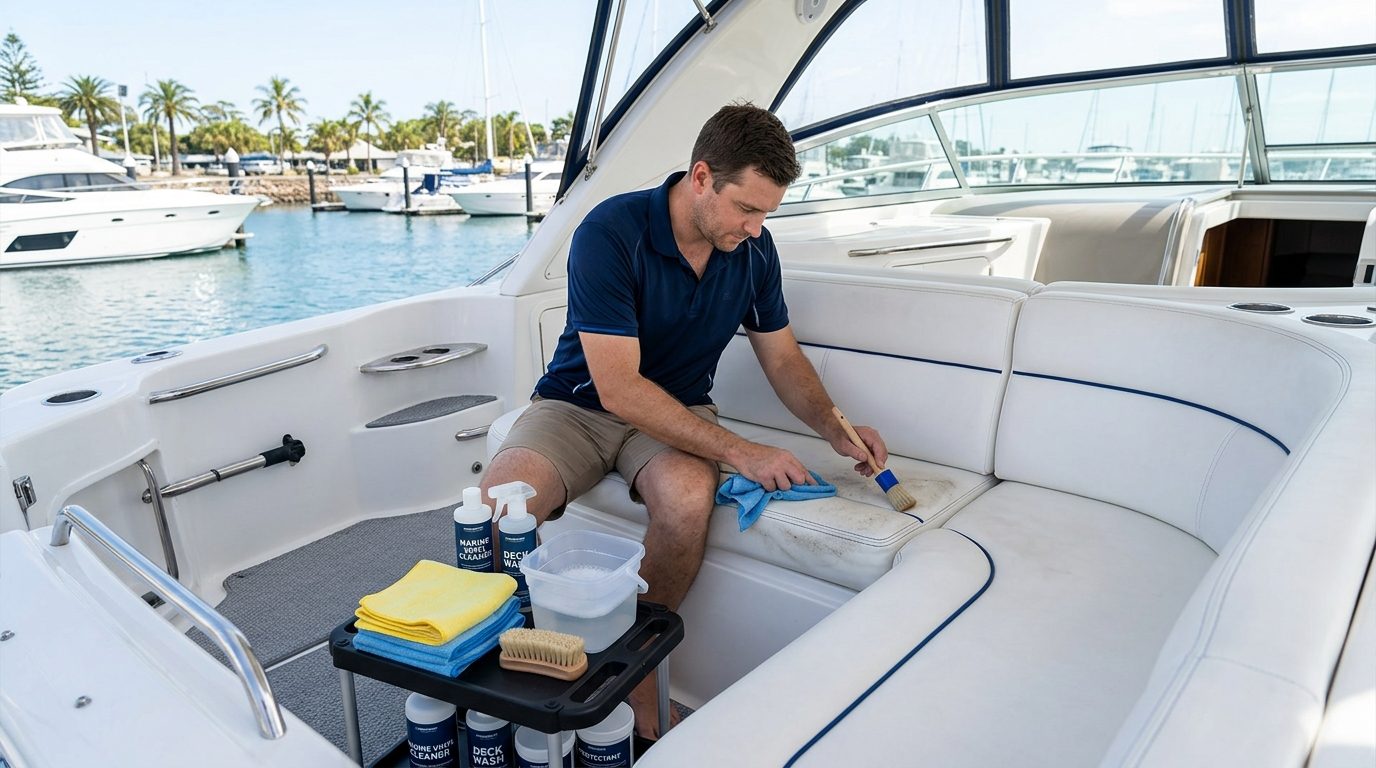
Boat seats wear out long before they should when grime is left to sit. After every trip, give them a quick wipe-down to clear the residue that breaks materials and stitching down. Salt water is only part of the problem - sunscreen, tanning lotion and general grime build up fast and attack the vinyl.
Clean all seats and cushions with a proper vinyl cleaner, because the wrong product does real damage:
- Bleach breaks down vinyl and stitching, and can bleach other surfaces nearby.
- Cleaners containing chlorine, alcohol or ammonia dry the vinyl out chemically.
Pay close attention to the seams and piped edges, where the most grime collects. Lift stubborn dirt with a sponge or a soft-bristle brush, rinse off the detergent, then dry with a towel.
How to Clean the Boat Carpet
Boat carpet is easy to forget in a boat cleaning routine, yet it takes a beating - wet feet, dropped bait, ground-in burley - and it shows, in both looks and smell. It is hard-wearing, but regular cleaning is what saves you from replacing it early. Treat it like the carpet at home: spot-clean fish stains as they happen, then give the whole lot a deeper clean on a regular basis.
How to Get Rid of Mould and Mildew on Your Boat
Most boat materials resist mould and mildew, but a damp environment is all it takes for spores to take hold, and your canvas is the most exposed. The fix is a product that strips as much staining as possible and kills the spores, so you are not back doing it again in a few weeks.
Where stains linger, a dedicated mildew stain remover does the heavy lifting. Whatever you are cleaning or detailing, spend a minute reading the product label and directions before you start - it is the difference between a finish that lasts and one you redo.
Your Boat Cleaning Schedule
Knowing how to clean a boat matters less if the jobs never happen on time. This simple boat cleaning schedule breaks the work into a rhythm so nothing gets away from you. Adjust it to how often you are on the water and where the boat is stored.
| How often | Boat cleaning and detailing jobs |
|---|---|
| After every trip | Fresh-water rinse of the hull, deck and fittings; quick wipe-down of seats; flush the salt off metal hardware. |
| Every few weeks | Wash the hull with boat soap; clean and polish metal fittings; rinse and treat aluminium; spot-clean carpet and seats. |
| Every 4-6 months | Full detail: cut back oxidation, wax the gelcoat or polish the aluminium, oil the timber, and deep-clean carpet and canvas. |
| Seasonally / before storage | Complete a clean and detailing, clear the bilge, treat mould-prone canvas, then cover up. Our winter storage guide covers laying her up properly. |
Stick to a schedule like this and boat cleaning stays a quick job rather than a full restoration.
Get Your Boat Cleaning Kit Sorted
The right gear turns boat cleaning from a dreaded chore into a fast, satisfying job. Stock up on marine-grade cleaning products built for the water - hull cleaners and wash & wax for the gelcoat, aluminium & stainless cleaners for the tinnie, vinyl cleaners for the seats, teak oil for timber and bilge cleaners for down below, plus the deck brushes to put it all to work.
When she is gleaming, keep her that way with a quality boat cover between trips. Not sure which product suits your hull or finish? The team at Boat Accessories Australia is happy to help - call us on 1300 308 161 or get in touch online, and we will point you to the right gear for the job.
