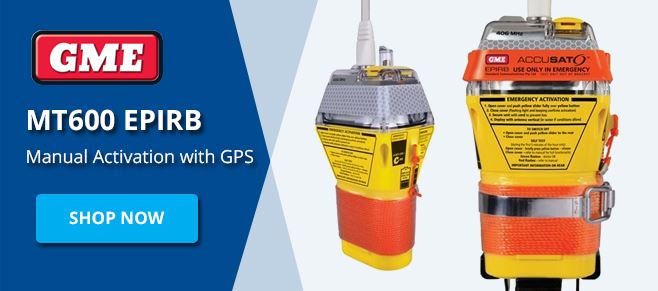
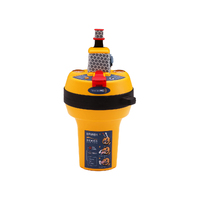
When facing a life-threatening emergency offshore, broadcasting your exact location to rescue authorities is vital. Carrying a registered PLB for sale or a vessel-mounted EPIRB provides a direct link to satellite search networks when mobile reception drops out.
At BAA, we stock compliant 406MHz emergency beacons online to keep you connected in deep water. Order your distress beacon today.
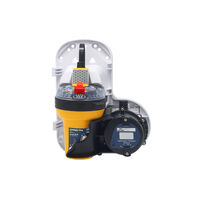
Selecting the correct distress beacon for your boat requires understanding the legal and operational differences between an EPIRB and a PLB. Emergency Position Indicating Radio Beacons (EPIRBs) are designed primarily for vessel safety, featuring inherently buoyant housings that float upright in water to transmit continuously for at least 48 hours.
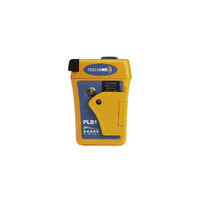
State maritime regulations often make carrying a registered 406MHz EPIRB mandatory when travelling past specific offshore limits. Personal Locator Beacons (PLBs) are compact, wearable devices designed to stay attached to an individual's lifejacket or foul-weather jacket. A PLB transmits for a minimum of 24 hours upon activation, making it an excellent safety addition for solo skippers, paddlers, and deckhands.
Modern emergency beacons utilise advanced satellite networks to pinpoint your emergency coordinates rapidly. Standard 406MHz beacons alert rescue coordination centres globally, while fitting a PLB with GPS channels reduces your location accuracy window down to roughly 100 metres.
Units featuring integrated 72-channel GPS receivers transmit your precise latitude and longitude instantly, speeding up rescue response times dramatically. Integrating AIS technology into your emergency locator system provides an extra layer of safety for offshore crews.
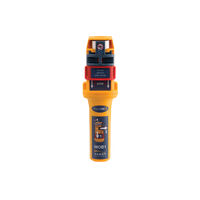
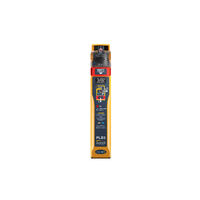
Beacons like the OceanSignal PLB3 or MOB1 transmit standard 406MHz satellite distress alerts while simultaneously broadcasting AIS signals to nearby vessels equipped with chartplotters. This dual-broadcast system allows your own boat or nearby vessels to navigate straight to your position for fast recovery, long before official search aircraft arrive on scene.
Every satellite distress beacon operated in Australian waters must be registered free of charge with the Australian Maritime Safety Authority (AMSA). Registering your EPIRB beacon provides search coordinators with your contact details, vessel description, and emergency contacts the moment a signal is triggered.
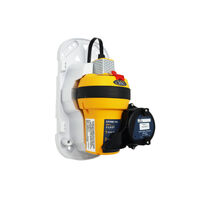
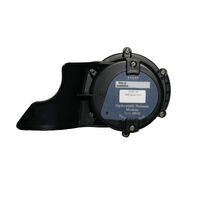
Choosing to buy EPIRBs or a personal EPIRB in Australia requires keeping your AMSA registration up to date so rescue teams can verify real emergencies fast. For larger vessels and commercial craft, mounting an EPIRB inside a float-free enclosure equipped with a hydrostatic release unit (HRU) is standard safety practice.
If your vessel sinks rapidly, the HRU cuts the bracket open automatically at a depth of one to four metres, allowing the EPIRB to float to the surface and start transmitting without human intervention. Replacing your hydrostatic release unit before its expiry date keeps your auto-deploy mechanism working properly.
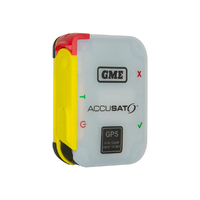
Carrying a lightweight PLB device on your belt or lifejacket harness gives you an independent emergency backup if you are separated from your vessel. We supply Australian-made GME MT610G units featuring 7-year battery lives, zero warm-up times, and rugged IP68 waterproof housings.
These featherweight beacons float natively, making them simple to operate even with cold, wet hands. Whether you look to buy PLB units for your crew or want to explore personal locator beacons for sale, our catalogue covers options from GME and OceanSignal.
Sourcing an emergency personal locator beacon or a vessel-mounted EPIRB safety beacon gives you the confidence to explore remote fishing grounds safely.
Do not take risks with offshore emergency communications when navigating out of mobile range. Equipping your lifejacket or hardtop with an EPIRB emergency beacon or a compact EPIRB device gives you a satellite link that operates worldwide.
Explore our full range of EPIRB locator units and satellite beacons online today. And to complete your vessel's safety kit, browse our full lineup of related boat safety equipment:

 FREE SHIPPING