Author: Boat Accessories Australia Date Posted: 26 November 2026
The right jockey wheel is the difference between a boat you can shuffle around the yard with one hand and one that fights you every step. Get the choice wrong, and you will struggle to wind it up and down, or bend it under the load. A few things decide which one suits your trailer: the load it has to carry, the wheel material, and the diameters of both the wheel and its sleeve.
The good news is that jockey wheel fitting is a quick, simple job once you have the right unit in hand. This guide walks through choosing the right jockey wheel, then fitting it, so you can get your trailer setup sorted properly.
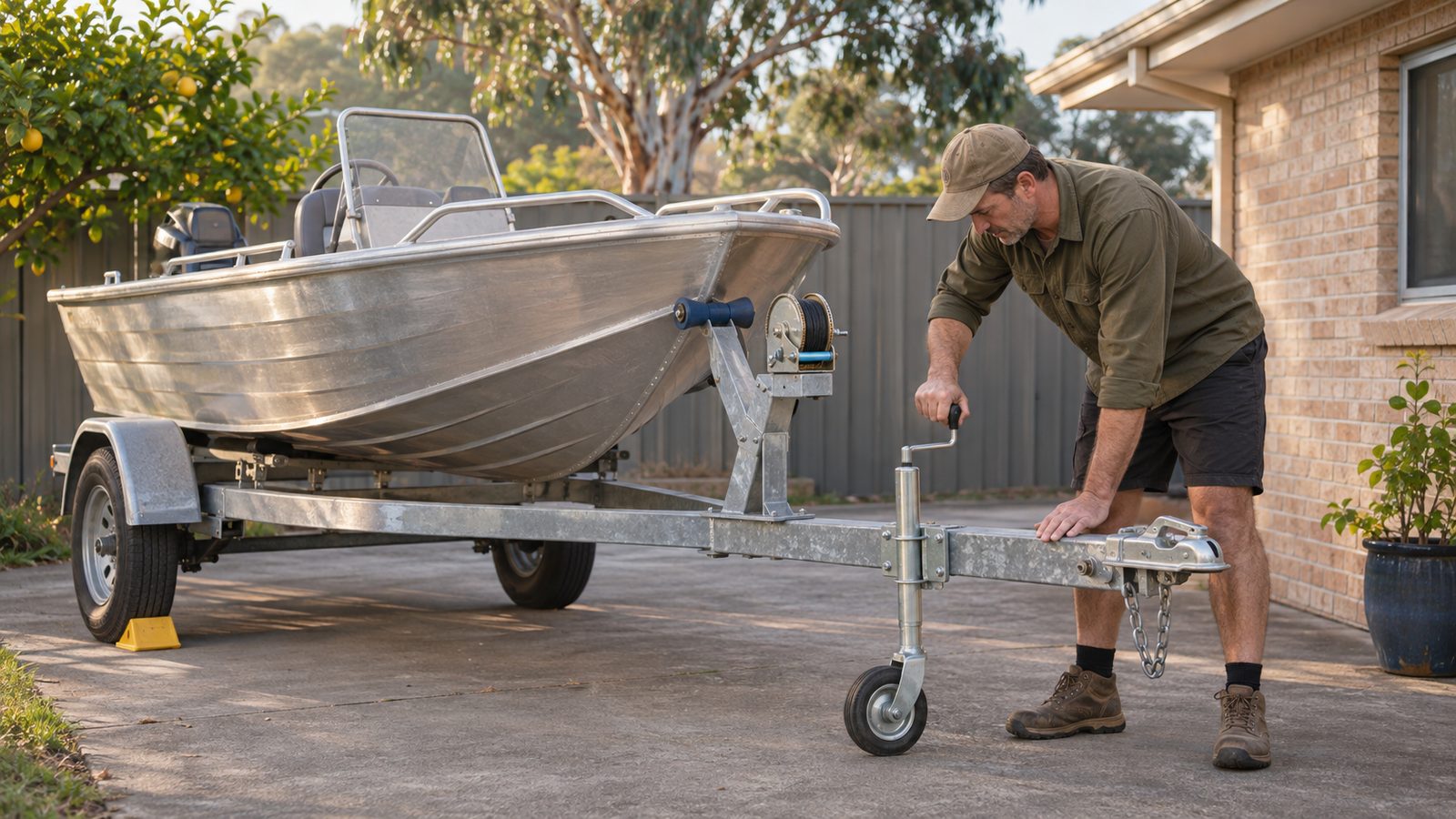
If you are replacing an existing jockey wheel, a couple of quick measurements save you buying the wrong thing. Before you shop, note down:
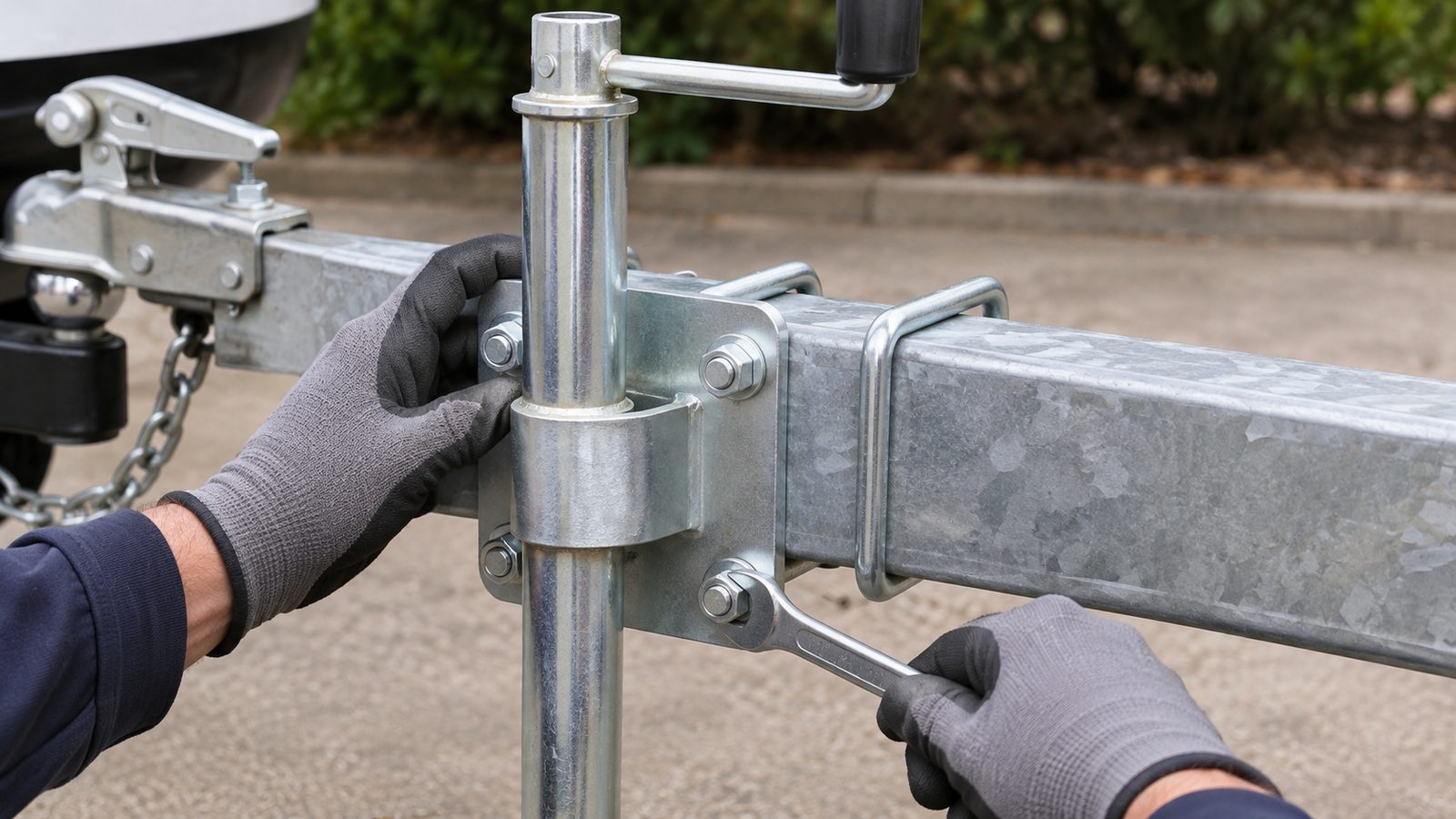
Jockey wheels come in a few styles, and the main difference is how they stow for travel. A standard or fixed jockey wheel bolts or welds onto the drawbar, and you set the height by sliding the shaft up and down.
A swivel-bracket jockey wheel takes it a step further: pull the release handle and the wheel rotates into a horizontal travel position, so it tucks out of the way. An adjustable swivel bracket gives you the most flexibility, letting you remove the wheel, swivel it up for travel, and set the height to suit.
Beyond the bracket, the wheel itself comes in two flavours, and the ground you launch on decides which you want. Solid wheels, made from rubber or nylon, are best on firm surfaces like paving, concrete and tightly packed soil.
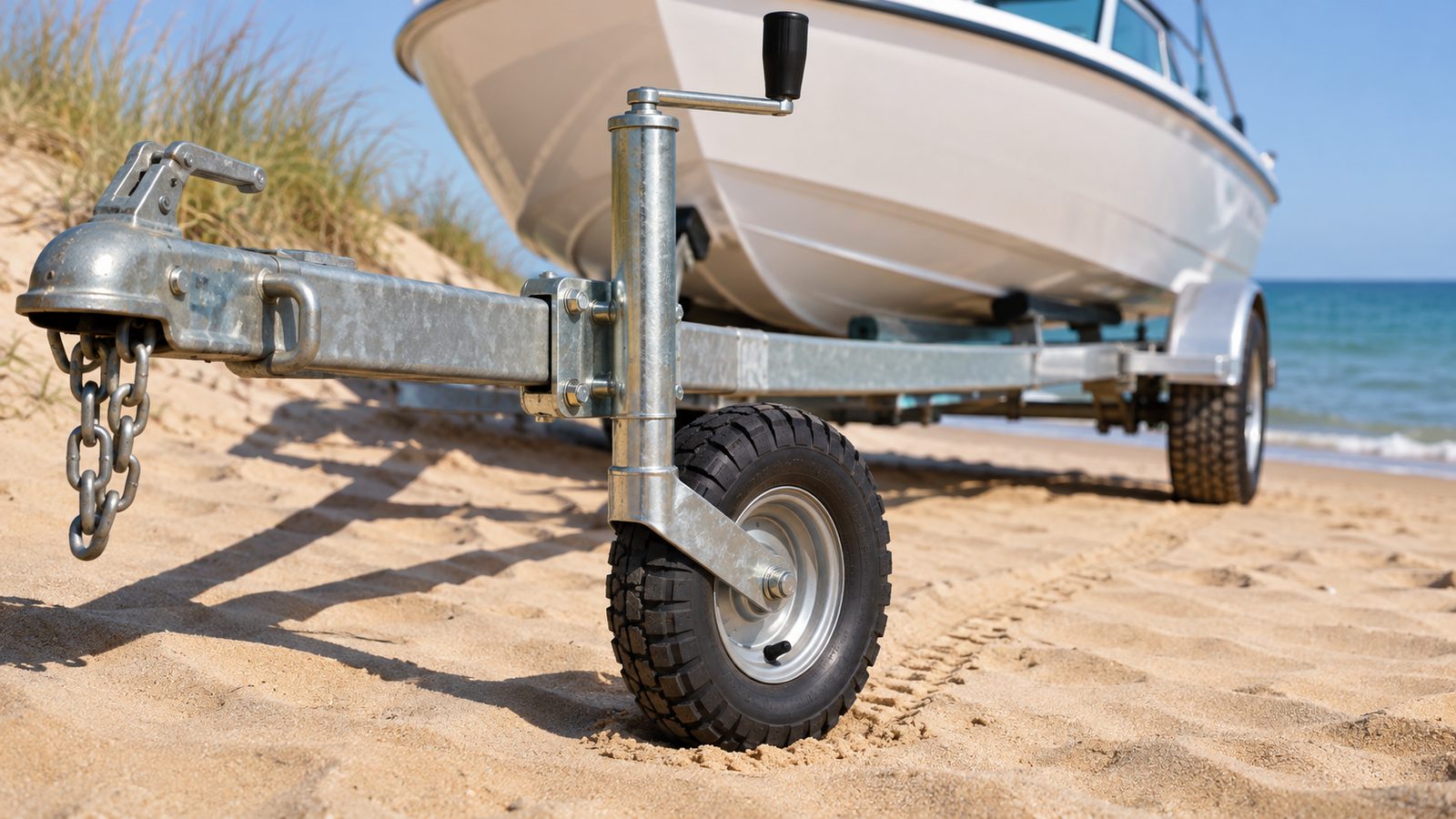
Pneumatic (air-filled) wheels are built for loose ground such as beach sand and mud, floating over it where a solid wheel would dig in and bog. One catch: you often cannot swap a solid wheel for a pneumatic one on the same unit, since pneumatic wheels tend to have a larger diameter. If you regularly launch on soft sand, factor that in from the start.
The sleeve is the vertical metal tube the jockey wheel slides into, and matching its diameter is what lets a new unit fit an existing bracket. Measure the outer width of your current sleeve and match it to the sizes below.
| Sleeve diameter | Typical use |
|---|---|
| 34 mm | The smallest available; too lightweight for boat trailers |
| 42 mm | Some light, unbraked trailers |
| 48 mm | The most common size for boat trailers |
| 60-63 mm | Heavy-duty boat trailers rated to 750 kg |
Load is the first thing to get right, because a wheel that is not strong enough will bend or become a nightmare in the wind. Add up the weight of your boat loaded with gear, plus the trailer, then add 20 per cent as a safety margin.
Your jockey wheel should carry a rating of at least 10 per cent of that total. So if the boat and trailer come to 3 tonnes, you want a jockey wheel rated to 300 kg or more. When in doubt, size up - a higher-rated wheel winds easier and lasts longer.
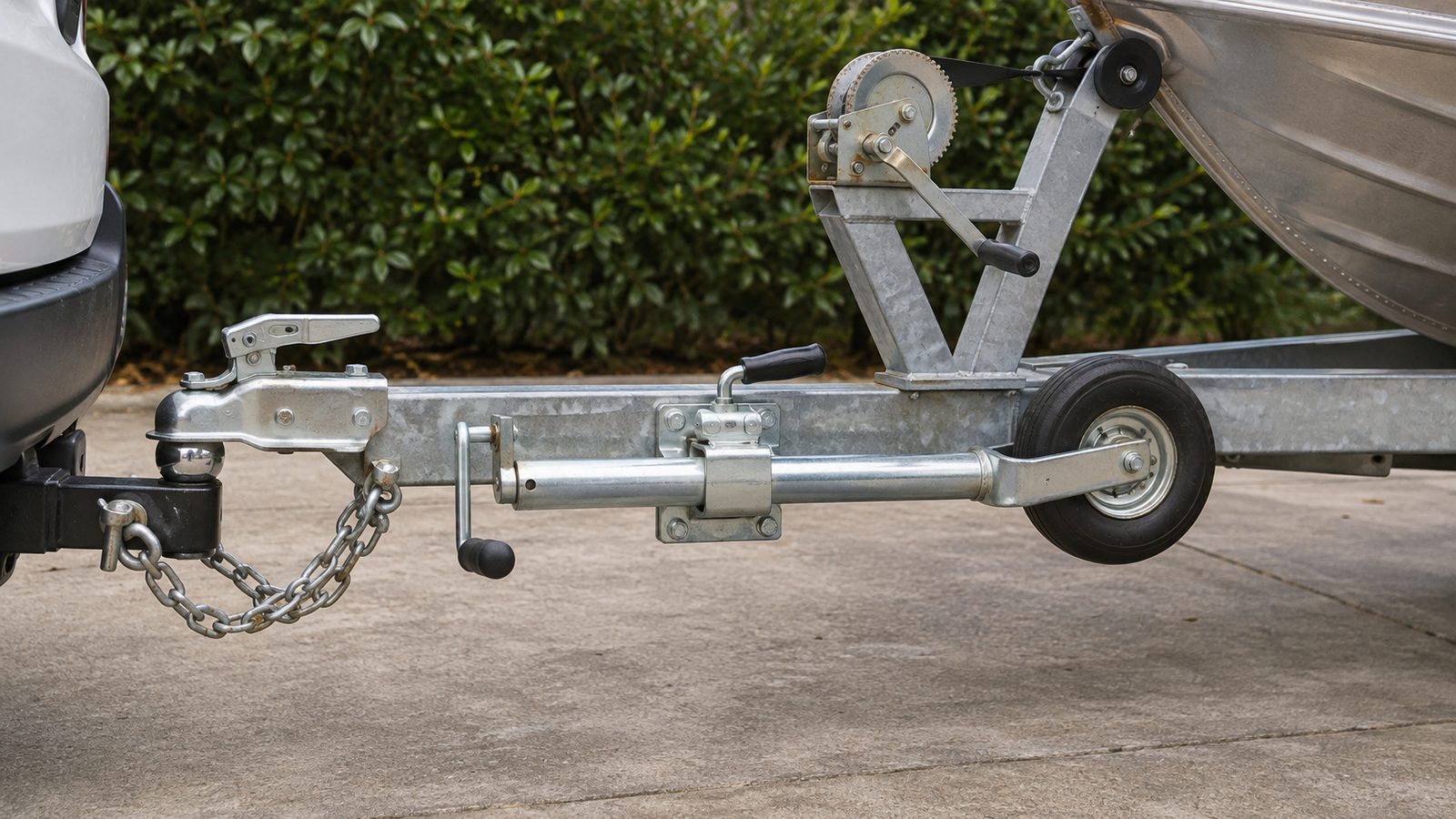
With the right unit in hand, fitting it is a relatively simple job. Work through these steps in order.
Once it is on, a bit of regular jockey wheel servicing keeps it winding smoothly for years rather than seizing up on you at the ramp.
Boat Accessories Australia stocks a jockey wheel for almost every trailer, so here is how the main options line up. For small to mid-sized boats, a standard jockey wheel with a fixed clamp rated to 350 kg is a dependable all-rounder in zinc-plated steel with a solid rubber wheel, and you can bolt, bracket or weld it on.
Prefer to fold it away for travel? The swivel-clamp version does the same job and tucks up out of the way. Step up to the premium 8-inch swivel jockey wheel for sealed bearings, an easy-tilt swivel and a heavier powder-coated build that shrugs off corrosion. Launching on soft sand?
The pneumatic 250mm swivel jockey wheel rides over loose ground where a solid wheel digs in. And for the boaties who launch anywhere at all, the extreme off-road heavy-duty jockey wheel runs dual wheels rated to 750 kg, pivots easily under load on soft ground, and locks into several height and stow positions to clear stone guards, toolboxes and jerry can holders on the drawbar.
Ready to pick one? Browse the full range of jockey wheels to match a unit to your boat and the ground you launch on. For the tough stuff, the heavy-duty jockey wheels handle bigger loads and rough terrain, while the jockey wheels and tyres range covers replacement solid and pneumatic wheels, and the swivels and clamps section has the brackets to mount it all.
Not sure which suits your trailer? Call the team at Boat Accessories Australia on 1300 308 161 or get in touch online and we will sort you out.
Match two things: the load and the sleeve. Your wheel should be rated to at least 10 per cent of the combined boat, gear and trailer weight (plus a 20 per cent safety margin), and the sleeve diameter should match your bracket - 48mm is the most common on boat trailers, with 60-63mm for heavy-duty rigs.
Solid rubber or nylon wheels suit hard ground like concrete and paving. Pneumatic (air-filled) wheels are made for soft sand and mud. You often cannot swap between the two on one unit, as the diameters differ.
Measure the height from the top of the handle to the bottom of the wheel, and the sleeve (vertical tube) diameter if you are fitting to an existing welded bracket.
Yes, it is a quick job. Support or hitch the trailer so it cannot move, pick a clear spot on the drawbar, bolt the bracket on evenly, and check the wheel winds up and down and swivels freely.

 FREE SHIPPING